Pythorixamen
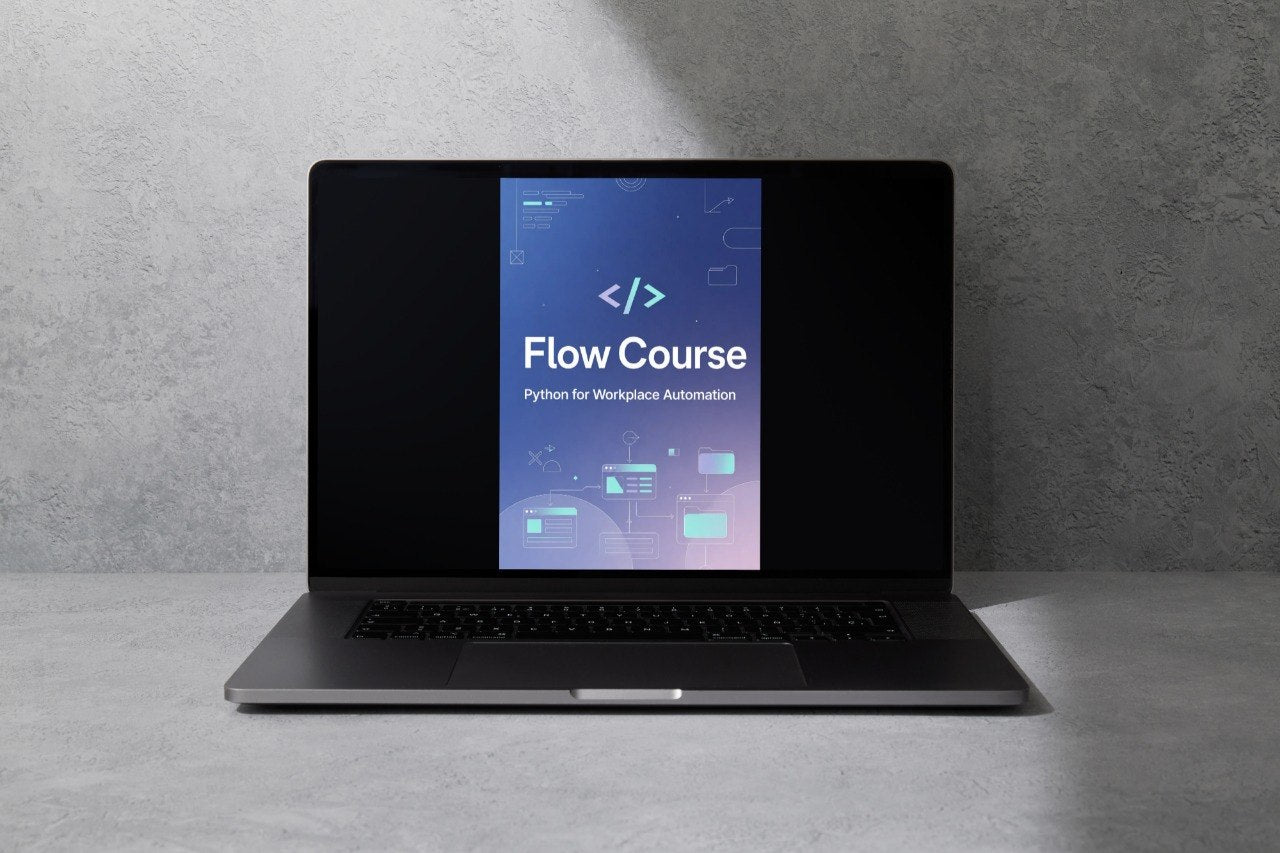
Flow Course
Flow Course
Couldn't load pickup availability
- 💾 Digital file available after purchase
- 🗂️ Long-term availability
- 🔐 Secure checkout
- 🆕 Content updated in 2026
Self-paced learning overview
At this stage, learners often understand Python basics, script structure, and simple data handling, but still need help connecting several steps into one complete workplace workflow. A task may begin with raw information, continue through cleaning and checking, and end with a prepared result. Without a clear flow, scripts can become confusing or difficult to adjust.
The Flow Course focuses on building multi-step automation routines with a clear beginning, middle, and end.
This course shows how to design Python workflows that move information through organized stages. Learners practice planning a process, preparing input, applying logic, checking results, and creating useful output.
The focus is on flow: how each part of a script connects to the next. You will learn how to make small automation routines easier to understand by using structured planning, readable functions, and careful review steps.
The Flow Course includes modules on workflow mapping, staged script design, data preparation, task sequencing, review checkpoints, and output formatting. The examples are based on workplace-style situations such as preparing task lists, cleaning repeated records, checking information before use, and generating organized summaries.
The materials include guided lessons, code examples, planning worksheets, practice exercises, and review checklists. Each module helps learners understand how a complete automation process is arranged from start to finish.
This tier is for learners who already know basic Python, functions, lists, dictionaries, and simple data checks. It is suitable for workplace learners who want to combine several Python skills into complete small workflows.
It is useful for administrative workers, coordinators, operations support roles, reporting assistants, students, and anyone who wants to build more organized Python routines for repeated digital tasks.
- How to map a workplace task before writing code
- How to divide an automation routine into clear stages
- How to connect input, processing, checks, and output
- How to use functions to manage workflow sections
- How to combine text handling, lists, and dictionaries
- How to add review points inside a script
- How to format results for easier reading
- How to reduce confusion in multi-step scripts
- How to adjust a workflow without rewriting everything
- How to prepare for report-style and file-based automation
This course includes a 30-day money back option.
You can review the materials during the risk-free period and decide whether the course fits your learning needs.
Share
What exactly is included?
What exactly is included?
Each Pythorixamen course includes structured learning materials focused on Python for workplace automation. Depending on the tier, the materials may include modules, written explanations, examples, exercises, checklists, and practical workflow references.
How long is the course?
How long is the course?
Course length depends on the selected tier. Introductory tiers are shorter and focused on core concepts, while higher tiers include more detailed modules, examples, and project-style materials
What format are the materials provided in?
What format are the materials provided in?
The courses are provided as downloadable digital materials. They may include PDF resources, written lessons, modules, examples, and structured learning files depending on the course tier.